


A container garden gives you the freedom to grow almost anywhere, a sunny balcony, a courtyard, a front step. But pots ask a little more of you than garden beds do. With no surrounding soil to buffer moisture and nutrients, a few small habits make all the difference between a container that struggles and one that thrives.
Watering
Pots dry out faster than garden beds, especially in a sunny position where the sun reaches the sides of the pot as well as the soil surface. Through the warmer months, most container plants need water more often than you'd expect, sometimes daily once summer sets in.
Elevating your pots slightly, with pot feet or a simple stand, helps with airflow underneath and stops water pooling at the base. Good drainage matters just as much as good watering. A pot that holds water for too long can do as much damage as one that dries out.
Soil quality
Since potted plants can't draw nutrients from the surrounding ground the way garden beds can, what you fill the pot with matters more than you might think. A good quality potting mix retains moisture without becoming waterlogged, and provides a steady release of nutrients over time.
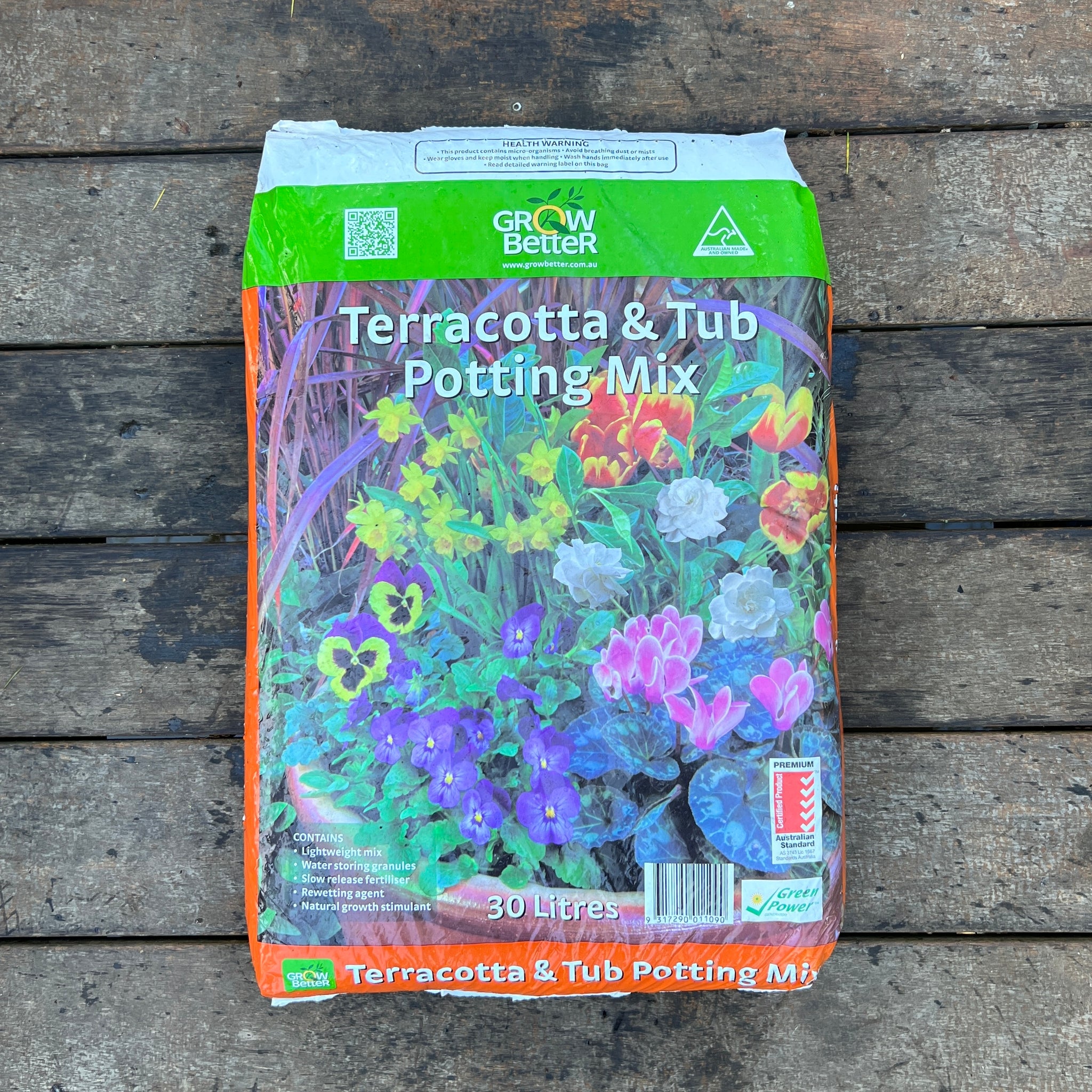
Terracotta & Tub Potting Mix
Our go-to mix for most container plants. Holds moisture with water retention crystals and feeds plants gradually with a slow release, all purpose fertiliser.
Shop now →
Native Potting Mix
A more free-draining blend suited to Australian natives, which prefer drier conditions around their roots than most exotic plants.
Shop now →Pot size
The larger the pot, the longer a plant can comfortably live in it. It's tempting to plant straight into a large, statement pot, but most plants do better sized up gradually as they grow. Moving a plant through a few pot sizes over its life gives the roots room to establish without overwhelming a young plant with more soil than it can use.
Repotting and transplant shock
Repotting is sometimes necessary, but it can cause a little stress to a plant while its roots settle into new soil.
After repotting
- Water in well — settle the soil around the roots and remove air pockets
- Add Seasol or a starter fertiliser — encourages healthy new root growth
- Keep out of harsh sun — give the plant a few days to settle before moving it back into full exposure
With a little care, a container garden can be just as full and productive as a garden bed, and a lot more flexible. Visit us in-store and our horticulturists can help you choose the right pot, mix and plant for your space.